High Bay LED Lights vs Traditional Lighting: Which Is Better for Industrial Applications?
Industrial facilities require more than basic illumination. Factories, warehouses, manufacturing plants, logistics centres, workshops and large production areas need lighting systems that provide clear visibility, reliable performance and controlled operating costs. Choosing between modern LED technology and conventional lighting can therefore have a direct impact on productivity, safety, maintenance requirements and long-term energy expenditure.
At Indian Electric Co., we understand that every industrial facility has different lighting requirements. Our approach is focused on helping customers select suitable High Bay LED Lights and Traditional Lights based on ceiling height, working environment, operating hours, illumination requirements and overall project budget.
This comparison explains the major differences between High Bay LED Lights vs Traditional Lighting and helps industrial customers make a more informed investment decision.
Understanding High Bay LED Lights and Traditional Lighting
What Are High Bay LED Lights?
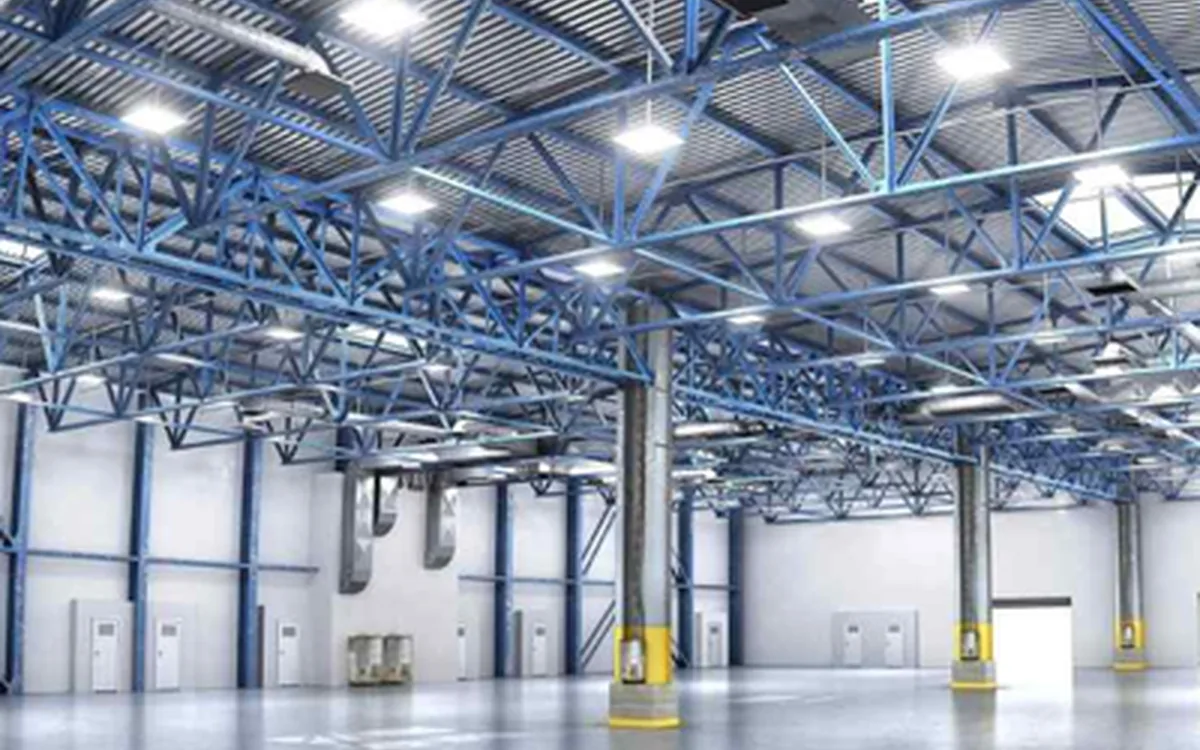
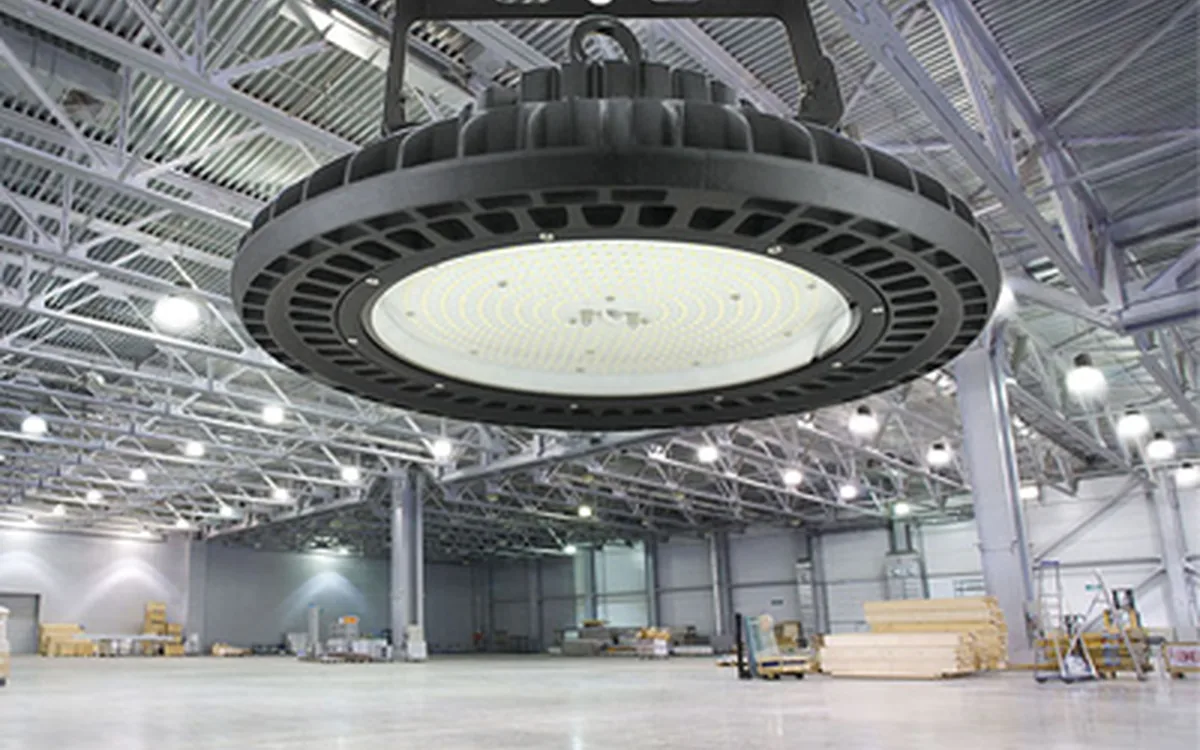
High Bay LED Lights are designed for spaces with high ceilings, generally found in warehouses, factories, assembly plants, indoor industrial facilities and distribution centres. These lights are engineered to deliver powerful and uniform illumination from elevated mounting heights.
Modern industrial LED high bays are increasingly available with advanced features such as:
- High-lumen output with improved optical control
- Wide and narrow beam angle options
- Dimmable LED drivers
- Motion and occupancy sensors
- Daylight harvesting controls
- Smart and connected lighting compatibility
- Improved thermal management
- Longer operating life
- Industrial-grade housings for demanding environments
What Is Traditional Industrial Lighting?
Traditional lighting may include technologies such as metal halide, high-pressure sodium and fluorescent lighting systems. These lighting solutions have been widely used in industrial facilities for many years and are still present in older factories and warehouses.
While traditional lighting can provide adequate illumination, customers may experience higher energy consumption, shorter replacement cycles and additional maintenance requirements depending on the technology and operating conditions.
High Bay LED Lights vs Traditional Lighting: A Complete Comparison
1. Energy Consumption
Energy consumption is one of the most important factors for industrial customers, particularly in facilities where lighting operates for long shifts or continuously.
High Bay LED Lights are generally designed to produce more usable light with lower power consumption compared with many traditional lighting technologies. This can help reduce electricity usage when replacing older, less-efficient systems with properly designed LED luminaires.
Traditional lights may require higher wattage to achieve comparable illumination levels, depending on the fixture type and application. In addition, some conventional systems may experience reduced efficiency over time.
From a customer perspective:
Our LED high-bay lighting solutions can help customers evaluate their existing wattage, operating hours and illumination requirements before selecting a replacement system. This makes it easier to focus on actual energy-saving opportunities rather than simply replacing one fixture with another.
2. Brightness and Light Quality
Industrial operations depend heavily on visibility. Workers may need to inspect products, operate machinery, move materials or identify safety markings.
High Bay LED Lights can provide:
- High lumen output
- More uniform illumination
- Better directional lighting control
- Faster start-up performance
- Reduced dark areas when properly designed
- Suitable lighting distribution for different mounting heights
Traditional lighting systems can provide high output, but light distribution, warm-up time and lumen maintenance may vary depending on the technology used.
For customers, the most important factor is not simply choosing the highest wattage. A properly planned lighting layout should consider lux requirements, mounting height, spacing, beam angle and the nature of the work being performed.
3. Maintenance Requirements
Maintenance can become a major operational challenge in high-ceiling industrial facilities. Replacing a failed light may require lifts, scaffolding, shutdown planning and additional labour.
High Bay LED Lights generally offer longer operating life and can reduce the frequency of lamp replacement compared with many traditional lighting systems.
Traditional lighting may require more frequent replacement of lamps or supporting components such as ballasts and other control gear.
Customer benefit:
Our objective is to help customers reduce unnecessary maintenance interruptions by recommending industrial lighting products suitable for the operating environment. This is particularly valuable for warehouses, production facilities and logistics operations where access to ceiling-mounted fixtures may be difficult.
4. Lifespan and Long-Term Performance
LED technology is widely preferred for its long operating life and gradual lumen depreciation characteristics. A quality High Bay LED Light with appropriate thermal management and a reliable driver can provide long-term performance when selected and installed correctly.
Traditional lamps generally have shorter replacement cycles and may experience more noticeable changes in performance during their operating life.
However, customers should not select lighting products based on advertised lifespan alone. The following factors are equally important:
- Quality of LED chips
- Driver reliability
- Heat dissipation
- Operating temperature
- Voltage conditions
- Dust and moisture exposure
- Installation quality
- Hours of daily operation
Our product selection process focuses on these practical operating factors so that customers can choose lighting systems suitable for their actual industrial environment.
5. Installation Considerations
Installation requirements can differ depending on whether the project involves a new industrial facility or an upgrade of an existing lighting system.
High Bay LED Lights can often be integrated into new installations and retrofit projects. However, proper planning is important to ensure suitable mounting height, fixture spacing and electrical compatibility.
Traditional lighting systems may already be installed in existing facilities, making initial replacement decisions appear straightforward. However, continuing to operate an outdated system can result in higher energy and maintenance costs over time.
For retrofit projects, we help customers consider:
- Existing fixture layout
- Ceiling height
- Wiring and electrical infrastructure
- Required illumination levels
- Number of fixtures
- Power consumption
- Operating hours
- Installation accessibility
This customer-focused approach helps avoid under-lighting or over-lighting the facility.
Comparison Table: High Bay LED Lights vs Traditional Lighting
| Comparison Factor | High Bay LED Lights | Traditional Lighting |
|---|---|---|
| Energy Consumption | Generally lower | Generally higher |
| Brightness Control | High and directional | Depends on technology |
| Start-Up | Instant in most LED systems | Some systems require warm-up |
| Maintenance | Lower replacement frequency | Higher maintenance requirements |
| Lifespan | Generally longer | Generally shorter |
| Heat Generation | Lower compared with many conventional systems | Can be higher |
| Smart Controls | Easily compatible with modern controls | Limited or requires additional systems |
| Industrial Retrofit | Suitable with proper planning | Existing conventional infrastructure |
| Long-Term Operating Cost | Often lower | Can increase due to energy and maintenance |
New Technological Developments in High Bay LED Lighting
The industrial lighting market is moving beyond simple on-and-off lighting systems. In 2026, customers are increasingly considering intelligent lighting technologies that can support better energy management and operational visibility.
Important developments include:
- Smart Lighting Controls: High Bay LED Lights can be integrated with occupancy sensors, motion sensors and automated scheduling systems. This allows lights to operate according to actual activity within specific areas.
- Connected Lighting Systems: Industrial facilities are increasingly adopting connected lighting systems that allow central monitoring and control. Customers can potentially manage different lighting zones more efficiently.
- Improved Thermal Management: Modern industrial LED luminaires use improved heat dissipation designs to support stable performance and longer component life.
- Advanced Optical Design: Modern lenses and reflectors can help direct light where it is required, reducing unnecessary light loss and improving illumination uniformity.
- Dimming and Daylight Integration: Facilities with skylights or natural daylight can use compatible control systems to adjust artificial lighting based on available daylight.
These developments are contributing to the growing demand for LED luminaires in industrial and commercial applications. Recent market research also indicates continued growth in India's LED lighting sector, supported by energy-efficiency requirements, infrastructure development and increasing adoption of connected lighting technologies. One 2026 market outlook estimates India's LED lighting market at approximately USD 12.54 billion in 2026, with continued growth projected through 2031.
Other market forecasts also indicate strong long-term growth, although exact market values vary depending on how researchers define and measure the lighting market. One 2026 forecast projects India's LED lighting market to grow at around 9% annually from 2026 to 2033, while connected and sensor-enabled lighting is expected to become an increasingly important part of the industry.
Which Lighting Solution Is Better for Your Industrial Application?
For many modern industrial applications, High Bay LED Lights offer clear advantages in energy efficiency, maintenance reduction, lifespan and lighting control. They are particularly suitable for facilities with high ceilings and extended operating hours.
Traditional lighting may still be present in older installations or specific applications, but customers planning long-term upgrades should evaluate the total cost of ownership rather than focusing only on the initial purchase price.
The right decision should be based on:
- Facility size
- Ceiling height
- Required lux levels
- Type of industrial activity
- Daily operating hours
- Existing lighting infrastructure
- Maintenance accessibility
Final Thoughts
The shift from traditional industrial lighting to High Bay LED Lights is increasingly driven by the need for energy efficiency, reliable illumination and lower maintenance requirements. However, the best lighting system is not simply the one with the highest wattage or lowest purchase price. It is the solution that matches your facility's operational requirements and delivers dependable performance over the long term.
At Indian Electric Co., we focus on helping customers access suitable High Bay LED Lights and industrial lighting solutions that support better visibility, energy efficiency and dependable operation. Whether you are planning a new industrial facility, upgrading a warehouse or replacing conventional lighting, selecting the right lighting configuration can create long-term value for your operations.